Ground Wasps in Kent: What They Are, Where They Nest and What to Do
If you’ve noticed wasps flying low over the lawn or repeatedly disappearing into a hole in the ground, there is a good chance you have a ground wasp nest. Ground wasps are a common problem in Kent during the warmer months and can catch homeowners off guard because the nest entrance may be hidden in grass, borders, compost areas or cracks in the soil.
At Kent Wasp Control, we regularly deal with ground wasp nests across Kent, particularly in gardens, banks, patios, school grounds, commercial landscaping and around sheds or outbuildings. Ground nests can become a serious issue if they are close to children, pets, footpaths, seating areas or entrances, so it is important to deal with them carefully and avoid disturbing the nest.
What Are Ground Wasps?
Ground wasps are not a separate species of wasp. In most cases, they are common wasps or German wasps that have chosen to build a nest below ground rather than in a loft, roof void or wall cavity. Instead of creating a nest in a sheltered roof space, they use an existing hole or cavity in the ground and build the nest inside.
This might be:
- an old rodent hole
- a gap in a bank or raised flowerbed
- a hollow under paving or decking
- a cavity beneath a shed base
- a crack around retaining walls or concrete edges
- a space in dry soil under shrubs or dense planting
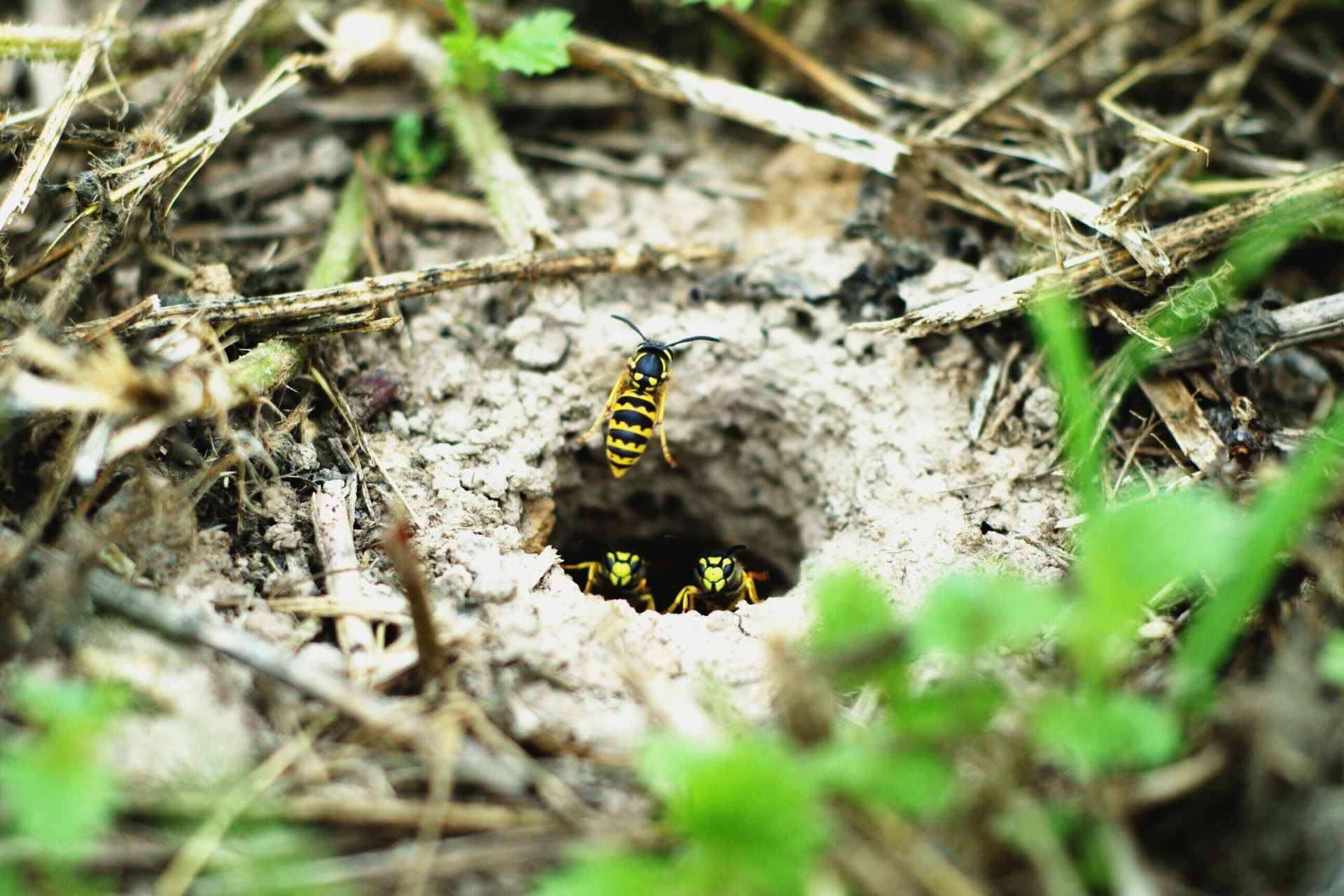
Once the colony becomes established, you may see a steady stream of wasps flying in and out of the same point.
How to Tell if You Have a Ground Wasp Nest
A ground wasp nest is often first noticed when people see wasps hovering close to the lawn or flowerbeds. Unlike a nest in a loft or eaves, you may not see the nest itself at all. Instead, the main clue is repeated movement to and from one small hole in the ground.
Common signs include:
- wasps flying in and out of the same hole in the lawn or soil
- increased wasp activity in one part of the garden
- buzzing or concentrated movement around a bank, border or hedge line
- wasps appearing from underneath paving, decking or steps
- a nest entrance close to a shed, greenhouse or patio edge
- sudden wasp activity when mowing the lawn or gardening nearby
Ground wasps can be easy to disturb accidentally because the nest entrance may be partly hidden by grass, weeds or loose soil.
Are Ground Wasps Dangerous?
Ground wasps can be a significant problem because they are often located in places where people walk, sit, mow, garden or let pets roam. If the nest is disturbed, the wasps may become aggressive and defend the entrance.
This is why ground nests can be particularly troublesome in:
- family gardens
- school grounds
- parks and communal areas
- pub gardens and hospitality spaces
- care home gardens
- commercial premises with landscaped grounds
- properties with dogs or young children
The risk is not simply the presence of the nest, but how easy it is to accidentally disturb it. A lawnmower, strimmer, dog, child playing nearby or someone weeding a border can all trigger defensive behaviour.
Where Are Ground Wasp Nests Commonly Found?
We often see ground wasp nests in Kent in the following locations:
1. Lawns and garden borders
A small entrance hole can appear in dry patches of lawn, near the edge of borders or under shrubs where the soil is sheltered.
2. Banks and sloped gardens
Wasps often make use of holes in raised banks, retaining slopes and embankments where the soil is dry and easy to access.
3. Under decking or paving
If there is a void under decking, a patio slab or a path edge, wasps may use this as a sheltered nesting space.
4. Around sheds and outbuildings
The soil around the base of a shed, greenhouse or summerhouse can provide a suitable nesting site, especially if there is an existing gap or burrow.
5. Commercial landscaped areas
Ground nests are also found around warehouses, office units, schools and public buildings where there are planted borders, grass banks or little-used corners of the site.t.
Why Do Wasps Nest in the Ground?
Ground nesting usually happens because the wasps have found a sheltered cavity that suits the colony. They are looking for a protected space with a narrow entrance and enough room inside for the nest to develop.
The attraction may include:
- old mouse or vole holes
- dry undisturbed soil
- shelter from wind and rain
- hidden spaces under roots, paving or structures
- quiet corners of gardens or grounds
Once a queen wasp starts a nest and the colony develops, activity increases through the summer as worker numbers build.
What Should You Do if You Find a Ground Wasp Nest?
If you think you have a ground wasp nest, the safest approach is to leave it alone and arrange professional treatment. Do not try to block the entrance, flood the hole or disturb the area.
What not to do:
- do not pour water, petrol, bleach or chemicals into the hole
- do not block the entrance with soil, stones or expanding foam
- do not try to dig the nest out
- do not mow, strim or dig near the entrance
- do not allow children or pets near the area
- do not attempt to burn or smoke the nest out
Disturbing a ground nest can make the wasps far more defensive and can result in multiple stings.
What you should do:
- keep people and pets away from the area
- mark the spot from a safe distance if needed
- avoid mowing or gardening nearby
- watch from a distance to confirm where the wasps are entering
- contact a professional wasp control company for advice and treatment
Can Ground Wasps Be Treated?
Yes. Ground wasp nests can usually be treated effectively, but the treatment method depends on the exact location of the entrance and how active the nest is. Professional treatment is designed to target the active nest while reducing the risk of provoking the colony unnecessarily.
At Kent Wasp Control, we treat ground wasp nests across Kent at domestic and commercial properties, including gardens, schools, hospitality venues, rental properties and business premises.
Ground Wasps in Kent Homes and Gardens
Ground nests are one of the more awkward wasp problems for homeowners because they are often discovered by accident. We are commonly called to properties where:
- the nest is in the lawn and children are playing nearby
- a dog has become interested in the entrance hole
- the nest is next to a patio or seating area
- the customer found the nest while mowing
- wasps are using a hole beside a shed or greenhouse
- the nest is in a flowerbed or retaining bank close to the house
If the nest is affecting the safe use of your garden or outdoor space, it is worth dealing with it promptly rather than hoping it will go away.
Commercial Ground Wasp Problems
Ground wasps are not just a domestic problem. We also deal with nests at:
- schools and nurseries
- warehouses and industrial estates
- pub gardens and restaurant terraces
- caravan parks and holiday accommodation
- farms and equestrian sites
- care homes and managed communal grounds
- offices with landscaped outdoor areas
Where the nest is near staff, customers, residents or public access, quick treatment is usually the safest option.
Ground Wasp Nest Removal in Kent
If you have found a ground wasp nest in Kent, Kent Wasp Control can help. We provide professional wasp nest treatment for homes and businesses across Ashford, Canterbury, Folkestone, Tenterden, Hythe, Cranbrook and surrounding areas.
If you are seeing wasps repeatedly entering a hole in the ground, contact us for advice and treatment before the problem gets worse.
Need Help with Ground Wasps in Kent?
If you have discovered a ground wasp nest in your garden, outside your business or anywhere on your property, get in touch with Kent Wasp Control. We can assess the problem, advise on the safest next step and arrange treatment where needed.
Kent Wasp Control: Fast, Professional Nest Removal Across Kent
At Kent Wasp Control, we’ve been dealing with wasp nests across the county for over 14 years. Our RSPH-qualified technicians cover all areas of Kent, including:
Ashford · Canterbury · Folkestone · Hythe · Tenterden · Cranbrook · Charing · Bethersden · Woodchurch · High Halden · Hamstreet · Sellindge · Pluckley · Challock · Wye
And many more towns and villages across the region.
We offer:
- ✅ Same-day or next-day appointments
- ✅ Transparent, upfront pricing — no hidden charges
- ✅ Discounts for multiple nests at one location
- ✅ Kent Trading Standards Approved (Ref: K09432)
- ✅ Open 7 days a week, 7:00am – 9:30pm
Most treatments take just one visit and are completed quickly using professional-grade insecticide that eliminates the entire colony within 24–48 hours.
Act Early in 2026 — Don’t Wait for the Problem to Grow
The best time to deal with a wasp nest is as early in the season as possible. A small, newly established nest is quicker and easier to treat than a fully mature colony in the height of summer.
If you’ve spotted signs of wasp activity on your property — or just want advice — get in touch with us today.
📞 Call: 07802 500180 (7 days a week, 7am – 9:30pm) 🌐 Visit: kentwaspcontrol.com
Don’t let a small problem become a summer nightmare. Kent Wasp Control is ready.
Kent Wasp Control is part of County Bird and Pest Control, serving domestic and commercial customers across Kent.