5 Common Places Wasps Nest Around the Home
Wasps don’t need much space to set up a nest—and once they do, they’ll defend it fiercely. If you’ve noticed more wasp activity around your home lately, it might be time to investigate where they’re hiding. Knowing the most common nesting spots can help you act quickly before things escalate.
1. Lofts and Attics
Lofts are one of the most frequent hiding places for wasp nests, especially in older properties. The dry, undisturbed environment makes an ideal home. You might notice wasps entering under the eaves or hear a low buzzing sound when you’re in the loft. Don’t try to inspect too closely—nests can be aggressive if disturbed.
2. Sheds and Outbuildings
Sheds, garages and other outdoor structures are another favourite. Wasps often build nests high in corners or in the roof space. If a shed is used only occasionally, a nest can grow unnoticed for weeks. Be cautious when opening doors or moving stored items if you suspect a problem.
3. Wall Cavities and Air Bricks
Small gaps in brickwork, particularly around air vents or damaged pointing, provide the perfect access point for wasps. They can build a large nest inside a cavity wall, completely out of sight. The only clue is the steady stream of wasps flying in and out of the same spot. Treatment can be tricky without the right tools and should always be done with care.
4. Under Roof Tiles and Fascia Boards
Wasps frequently tuck nests under loose roof tiles or behind fascia and soffit boards. These spots are sheltered from the elements and out of view. It’s common for homeowners to notice increased wasp activity around the gutter line in early summer—this is a sign to investigate further or get advice.
5. Underground or in Compost Heaps
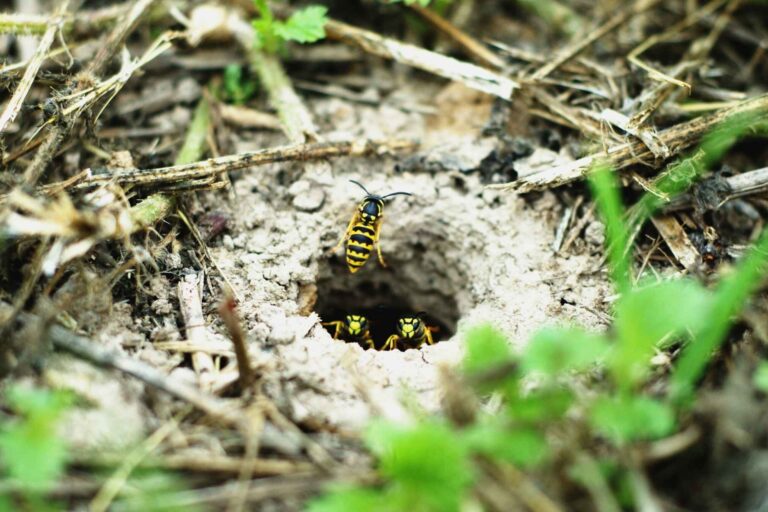
Some species, like the German wasp, will happily build nests in old rodent burrows or under decking. You may also find nests at the base of hedges or inside compost bins. These ground-level nests can be dangerous, especially if disturbed by children or pets in the garden.
Spotting the Signs Early
Early signs of a nest often go unnoticed—just a few wasps flying around. But nests grow fast and can house thousands of wasps by late summer. If you suspect you’ve found one of these common nesting spots, don’t ignore it. Trying to deal with it yourself can lead to stings and make the problem worse.
At Kent Wasp Control, we’ve safely removed nests from every one of these spots (and a few more unexpected ones). If you’re unsure whether it’s a nest—or just want peace of mind—give us a call. We’re happy to inspect and advise.
See our FAQ section for more information.